

I have a Dream
How does the 250th celebration of the US make you feel this July 4th? What might change that feeling?

Midway through MLK’s August 28, 1963, speech on the steps of the Lincoln Memorial, Mahalia Jackson, a famous gospel singer, shouted, “Tell them about the dream, Martin.” King pivoted and delivered extemporaneously what would become the iconic “I Have a Dream” speech.
So even though we face the difficulties of today and tomorrow, I still have a dream. It is a dream deeply rooted in the American dream. I have a dream that one day this nation will rise up and live out the true meaning of its creed: We hold these truths to be self-evident, that all men are created equal.
I have a dream that one day on the red hills of Georgia, the sons of former slaves and the sons of former slave owners will be able to sit down together at the table of brotherhood.
I have a dream that one day even the state of Mississippi, a state sweltering with the heat of injustice, sweltering with the heat of oppression, will be transformed into an oasis of freedom and justice.
I have a dream that my four little children will one day live in a nation where they will not be judged by the color of their skin but by the content of their character. I have a dream today.
I have a dream that one day, down in Alabama with its vicious racists, with its governor having his lips dripping with the words of interposition and nullification, one day, right down in Alabama, little Black boys and Black girls will be able to join hands with little White boys and White girls as sisters and brothers. I have a dream today.
I have a dream that one day every valley shall be exalted, every hill and mountain shall be made low, the rough places will be made plain, and the crooked places will be made straight, and the glory of the Lord shall be revealed, and all flesh shall see it together.
I legit wonder what MLK would have felt about where we are in this moment. On one hand, the progress this nation has made since we lost a 39-year-old King to an assassin’s bullet in Memphis in 1968 is remarkable. He presided over some of this country’s most substantial changes that created more equity and opportunity for all people. Sadly, he never got to see the fruit of that labor.
I imagine he would look at that work, though, and remain unsatisfied. As much as we have become a fairer and more just society, if you are paying attention and honest, it is clear we are very far from providing everyone their fair shot at the American Dream. And I can’t believe MLK wouldn’t be pointing at our current moment, the steady erasure of Black and Indigenous history, the erosion of civil rights, the state-sanctioned racist assaults, blatant acts of bigotry, and full-throated white supremacy, saying, “Yup, I could have told you that this was coming.”
King famously spoke about how progress was neither inevitable nor linear. He would have expected what many are shaken by today from the Trump administration, allies, supporters, and the Supreme Court. He had seen worse in his short life. That was only sixty years ago! You can walk outside right now and find a neighbor to talk to who lived through that era.
I keep thinking about that “Dream” King laid out, off the top of his dome, when Mahalia urged him to bring the authenticity.
Why?
I keep seeing these images of the number 250 drawn in a ribbon of red, white, and blue. You know the one. They are literally everywhere right now. Just saw one this AM, stopping by my doctor’s office.

What would MLK have felt and said when seeing this 250?
What would Malcolm have felt and said?
Or Frederick Douglass?
Or Sitting Bull?
Or Ella Baker?
Maya Angelou?
Thurgood?
Harriet?
What are some of those civil rights leaders still alive today thinking when they see the 250?
How does this make you feel, Diane Nash?
Do you feel that sinking feeling in your stomach that I do? That sourness that makes you turn your gaze away and hope you don’t inadvertently divert your line of sight into another 250. Do you feel guilty, given your veteran grandfathers, for feeling shame and frustration at the sight of the 250? Do you feel the complexity of knowing you can’t and would not choose to live somewhere else (yet), but are enraged at the steady lies of the “American” marketing plan? Are you angered by a promise of freedom that never really lives up to that promise? That you live with immense freedoms relative to most of the world – depending on your ZIP code – but that there is an obvious hierarchy to those freedoms that many deny, often people with the best of intentions, but who are blind to their own privileges? Do you take issue with the way “America” gets used as a synonym for the United States, implicitly claiming an entire continent for one country while ignoring the nearly 300 million people living across the rest of the continent of North America alone (700 million if we count both Americas)?1 Are you tired of trying to get people to open their eyes more fully to the mythology that props up the 250?
Do you feel a sense of shame and anxiety saying that out loud?
I was recently asked a heady question: “Do you consider yourself a patriot?”
Of course, this depends largely on what one defines as a patriot. For me, I kept coming back to a consideration of two things. One, whether I would put my life on the line for this country were it legitimately threatened, and two, whether I feel pride in wearing anything that corresponds to the USA?
My answers to those questions were strong yeses when I was younger. Now, honestly, I am an unsteady yes-ish for question one. It would depend on the threat and who the provocateur was. It would depend on what fighting meant for protecting my family more than the nation itself. For question two, I am currently a pretty sad “no”. I can’t find much pride right now in repping the US colors. I was more apathetic than ever about Team USA during the recent Winter Olympics. This surprised me, as I didn’t anticipate that indifference. I would cheer for individual athletes. But watching Logan Paul and Kash Patel parade around the games with their absurd, braggadocious, toxic masculinity pro-USA antics made me want to hide my head (and I would have hidden my US flag pin right alongside that).
Fictitious fan I meet at the ‘26 Winter Games: “Where are you from?”
Me: “Oh, me. I’m Canadian.”
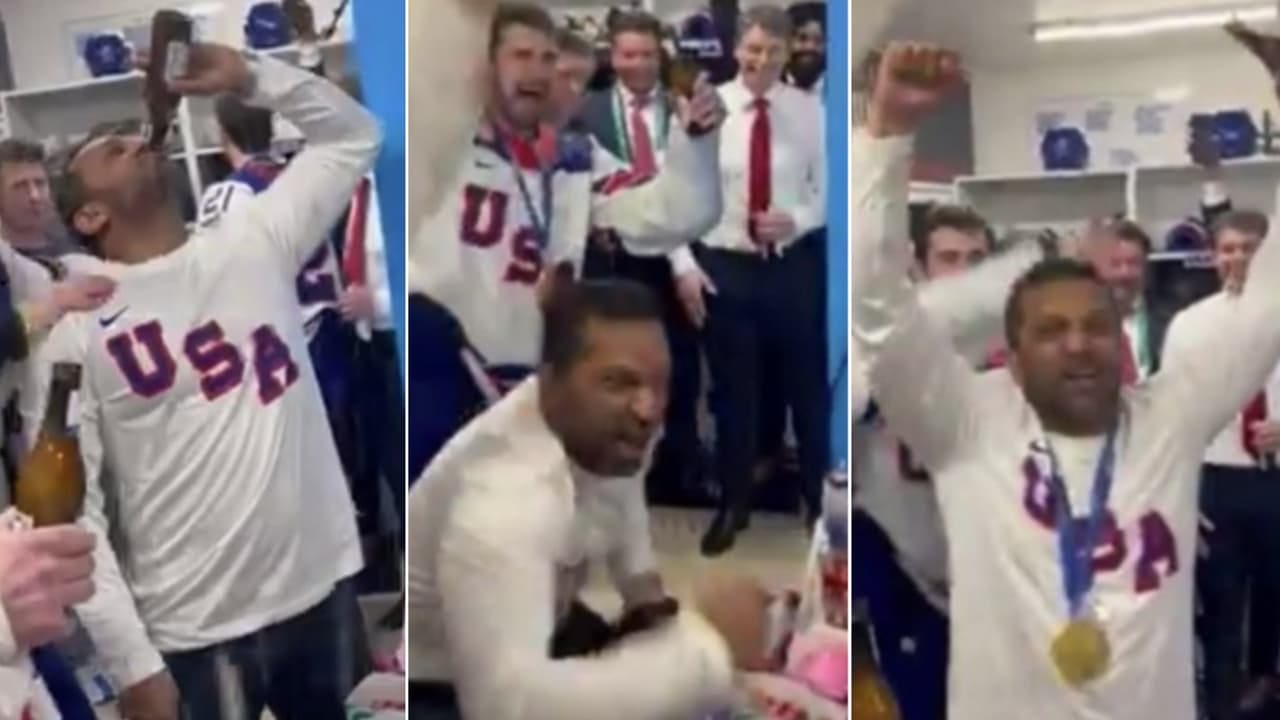
There is no way I would not have been excited to see Team USA hockey men and women win the gold even as recently as five years ago. So what happened? Or more aptly, what is happening, as my transformation feels more recent?
To be blunt, white supremacy is happening – not that it ever stopped, really. And to be more nuanced, patriarchal white supremacy is happening in two places. First, there is the easy-to-identify, in-your-face “fire all the Black people and women and segregate society,” White Christian regime that is actually running the country right now. But there is also the “we should just try to get along and keep our heads down so we don’t lose the comfort and privilege we enjoy” White liberals who are desperate to regain control.
The vast majority of US societal power lives in those two places. A conservative machine happy to steamroll People of Color with whatever tools are at its disposal. A liberal machine, currently out of power, that is willing to look the other way as People of Color get run over, but who are often comfortable (in “polite/nice” ways) using us to achieve what they want. As long as we don’t try to insert too much of what we want with that.
Neither seems to have me or my family’s best interest at heart, though the liberal side will tell me they do with their yard signs, social media profiles, and public pledges.
I have had too many conversations with well-meaning White folks who think I am being hyperbolic when I point out the steady evisceration of civil rights and basic liberties for People of Color happening every day. The Supreme Court literally finished off (Louisiana v. Callais) an already anemic Voting Rights Act (Shelby County v. Holder), with the immediate aftermath a slew of redistricting actions by southern states that dramatically reduced the voting power of Black communities. It is in-your-face discriminatory disenfranchisement. This comes on top of racial profiling and racist abuses by ICE; the Department of Education’s Office of Civil Rights threatening punitive measures against any efforts in support of People of Color by using an inversion of the 14th amendment in the same way the Supreme Court did when ending affirmative action; the eviscerating of benefits (SNAP, TANF, healthcare, student loans, etc.) that go to low-income families including many People of Color; an assault on any policy that embraces acknowledgement of past racism and oppression and attempts to rectify that, including the first reparations program in the US for Black people; and the Equal Employment Opportunity Commission (EEOC) actively soliciting discrimination claims from White men, just to name a few. Want more? Read some of my posts since the new administration started. Where do we end up? When you do the math, how can any rational person call claims that there is a deliberate racist assault on People of Color hyperbolic?
I don’t believe this is intentional gaslighting for the most part. It is a lack of understanding as a result of never having had to navigate the US systems of oppression. At least not in the manner People of Color have to daily. The rationalization that “it isn’t that bad” comes from a lack of proximity to discriminatory-driven struggle. Maybe that is fair, that it isn’t as bad as it could be, yet. I base my assessment on what I think MLK or others pre-Civil Rights Act might say about what we are witnessing. “It isn’t that bad yet.” Fair. But too many comfortable, well-meaning people are complacent as they watch things come apart because the unraveling hasn’t affected them directly. There is a lot of intellectual dismay.
“Oh my gosh, that’s awful.”
“I can’t believe that happened.”
“This President is so racist.”
“This Supreme Court decision is terrible.”
But for many of the well-meaning White folks out there, there always seems to be this sentiment that we will find our way out of this. Somehow. I have heard numerous people say something akin to “US Democracy will prevail.”
“We will fix it in the midterms or with the next Presidential election.” “Our Democracy has to survive, right?” It’s been around for 250 years.
There are plenty of examples in human history of a dominant nation or empire that lasted well beyond 250 years. However, there are a lot more examples of ones that did not. The average age of an empire before it fell is around 250 to 300 years.
A sobering reminder that this thing we have (had?), this multicultural democratic experiment, is not guaranteed. We could F this up if we aren’t careful – I hear that sentiment a lot. But I also want us to be honest about how this experiment came to be. Without that truth-telling, we seem to always slide back to where we were, where it was comfortable for the power structure. I would posit that we saw signals of a multicultural democratic reality with a commitment to truth-telling for the USA during Reconstruction immediately following the Civil War; during the Civil Rights movement of the 60s; when we saw our first Black President; and the 2020 racial reckoning (kind of) that came with the murder of George Floyd. It peeks its head up from time to time, before it gets stomped down by those committed to the preservation of the US norm, a racialized hierarchy.
The regression back toward the mean is always aligned with the two camps of power, which is inevitably a regression back toward one of the two dominant faces of white supremacy - the ruthless one and the polite one. Without owning our whole story as a country, especially our origin story, we struggle to step toward a more just and equitable nation for everyone who lives here, whether or not they choose to wear red, white, and blue. Every step faces resistance, and there is always a backlash.
Our origin story is messy. It was a rebellion, and because the USA successfully seceded from a monarchy, we get to tell the story of the country’s glorious defiance and shedding of tyranny and oppression.
“Is life so dear, or peace so sweet, as to be purchased at the price of chains and slavery? Forbid it, Almighty God! I know not what course others may take; but as for me, give me liberty or give me death!” - Patrick Henry, 1775
Despite all the flowery language we learned in US history class about our liberation from the British Empire, 1776 was almost exclusively about wealthy White landowning men “freeing” themselves to build more wealth without the British Empire’s intervention or interference with that objective. It was about the ambitions of capitalism and those with privilege (and freedom) pursuing their economic interests at the expense of less fortunate human beings.
Patrick Henry is one of dozens of examples. His career and wealth were possible through the enslavement of others, those he received via dowry and others he purchased. Over his lifetime, he enslaved hundreds of people, and the Henry ancestry benefited from the many individuals who propped up his journey to become Virginia’s first governor. Enslaved and Free Persons at Patrick Henry’s Red Hill provides a robust record of the many lives he exploited. Ironically, he also chose the words “Is life so dear, or peace so sweet, as to be purchased at the price of chains and slavery” and gave us one of the most famous slogans in US history with “give me liberty or give me death.” For the man who stated these words to also be the same man who owned and exploited the labor of hundreds of human beings is really a head-scratcher. Then again, I doubt he saw his enslaved “stock” as human. So it really isn’t much of a head-scratcher. It is about as “American” as apple pie, once you understand that most of the men responsible for establishing the United States of America lived in this contradiction. It is just sad that many people in the US don’t know or understand that, and many spend an incredible amount of time trying to hide those unalienable truths.
Given where we are right now, our 250th anniversary as a country is hard for me to stomach. I still have sentiments about the 4th of July similar to those of Frederick Douglass, so I didn’t anticipate running to turn on the TV or attend some event for the 250th anniversary of the USA. What surprised me was the sense of disgust and shame I have when I see that 250 logo. I am embarrassed by it.
But then a sliver of hope emerged, one that suggested I might find my pride in my country once more. It won’t get me over the hump yet of our two dominant white power structures wanting to steamroll me or just look the other way. But it does bring me back to when I was a kid and could innocently, if not naively, root for what was good about this country. The aspects of MLK’s Dream that bubble up despite all the efforts by white supremacy to hide them away.
I was watching the US Men’s national team friendly against Germany, leading up to the World Cup, when I noticed their uniforms had rainbow-colored numbers.
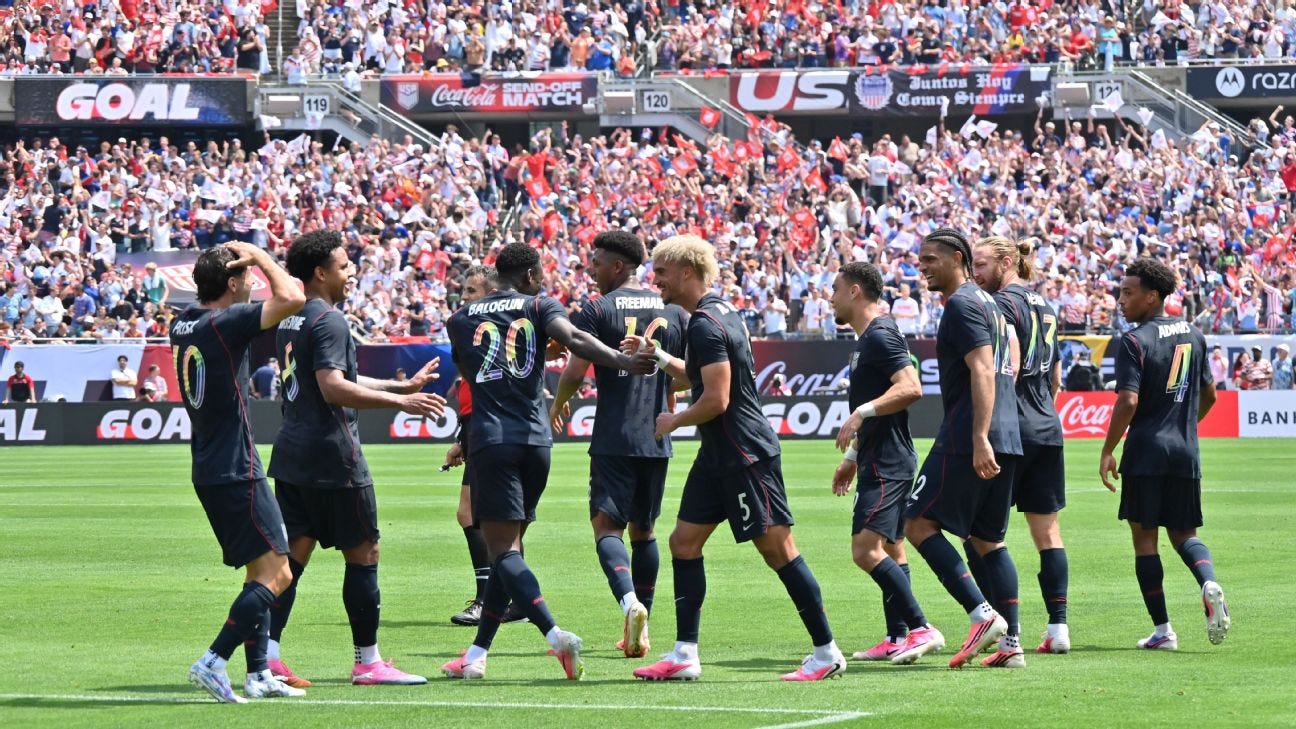
I have been feeling demoralized by what has been coming out of our federal administration. I just didn’t realize it. The impact was to the point that I had not even considered where acts of open defiance to racism and exclusion are occurring. Per US Soccer: “The U.S. Men’s and Women’s National Teams wear rainbow-colored jersey numbers to celebrate LGBTQ+ Pride Month and to show support for equality, inclusion, and safety for all athletes in the sports community.”
And look at the diversity on this team. It is the best of what makes the United States special - multicultural, multiracial, multi-religious, pro-immigrant, and heterogeneous in countless other ways - and intentional about standing for inclusion. The women’s team is just as powerful a representation of diversity, plus the added transformation they have led for gender equality.
King had a Dream, one that many of us share. And despite the aggressive efforts being taken by those in power to preserve a racial and gender hierarchy, there are still signs of progress. And with the World Cup, the Men’s US team is a very prominent illustration of MLK’s Dream on display for the world to see. I am noting its contrasting depiction of who we are in real time to the absurd patriarchal racism of the current administration and their portrayal of who we are, even as they insert themselves into the event by finding ways to discriminate against players, teams, fans, and even some of the referees. US Customs banned Somali referee Omar Artan from living out his dream of refereeing a World Cup for dubious reasons. Players, team staff, and fans from countries like Senegal, the Ivory Coast, and the Middle East have been subjected to intense screenings and flat-out barred access in some cases. You know which nations have not seen this level of harassment? The predominantly white European ones. Muhammad Sankari, organizing director at the Arab American Action Network, got it right when he said that “this is rooted in the racism of this administration.” Sankari went on, “It is totally unacceptable for a host nation of an international sporting competition to treat people this way.” But here we are. And the whole time, our US Men’s team represents exactly the opposite of this administration’s racism and hate.
So I will find myself a US shirt with rainbow numbers and cheer on a US team for the first time in years, knowing that every time they win, they prove the anti-DEI, anti-immigrant, anti-inclusion regime wrong, no matter how hard Alexi Lalas tries to push a braggadocious “USA! USA!” narrative. I mean, what better symbolism is there than having a young black player named Freeman score a goal to help the US win on Juneteenth? That is absolute fire.

The fact is that the Dream is alive as long as we keep it alive. That means courageously standing up against racism, not accepting the tired “it isn’t that bad” gaslighting, whether intentional or not, and walking in pride with our colors - all of our colors. We have to show up with all the shades of melanin and hues of the rainbow represented in equal measure. We have to show the world that we are beyond the white supremacist backlash of the moment.
So I have a Dream.
I have a Dream that the more we refuse to go away, the more our full history will become the common narrative in this country.
I have a Dream that we will be able to live in the complex truth of the last 250 years.
I have a Dream that we will realize that our basis of organized laws is the only thing that is 250 years old, but that the diversity of who is now on this soil started long before that and will continue long after.
I have a Dream that we will see how joy is an act of resistance, and we will never allow whatever we face to steal that from us.
I have a Dream that we will acknowledge the original people of this land and the harm that was done to build this nation, long before this nation was organized.
I have a Dream that we will see the long shadow of slavery and the stain of anti-Blackness as the underbelly of our institutions, and begin prioritizing the populations of people that still struggle within the wake of structural racism from that historic tsunami.
I have a Dream that the wealthiest country in the history of the world will see reparations as not only valid and just, but as a necessity, like many nations have recently acknowledged and advocated for.
I have a Dream that, because we keep showing up, in our joy, and because we refuse to hide from the truth, the potential MLK saw in this nation becomes our truth.
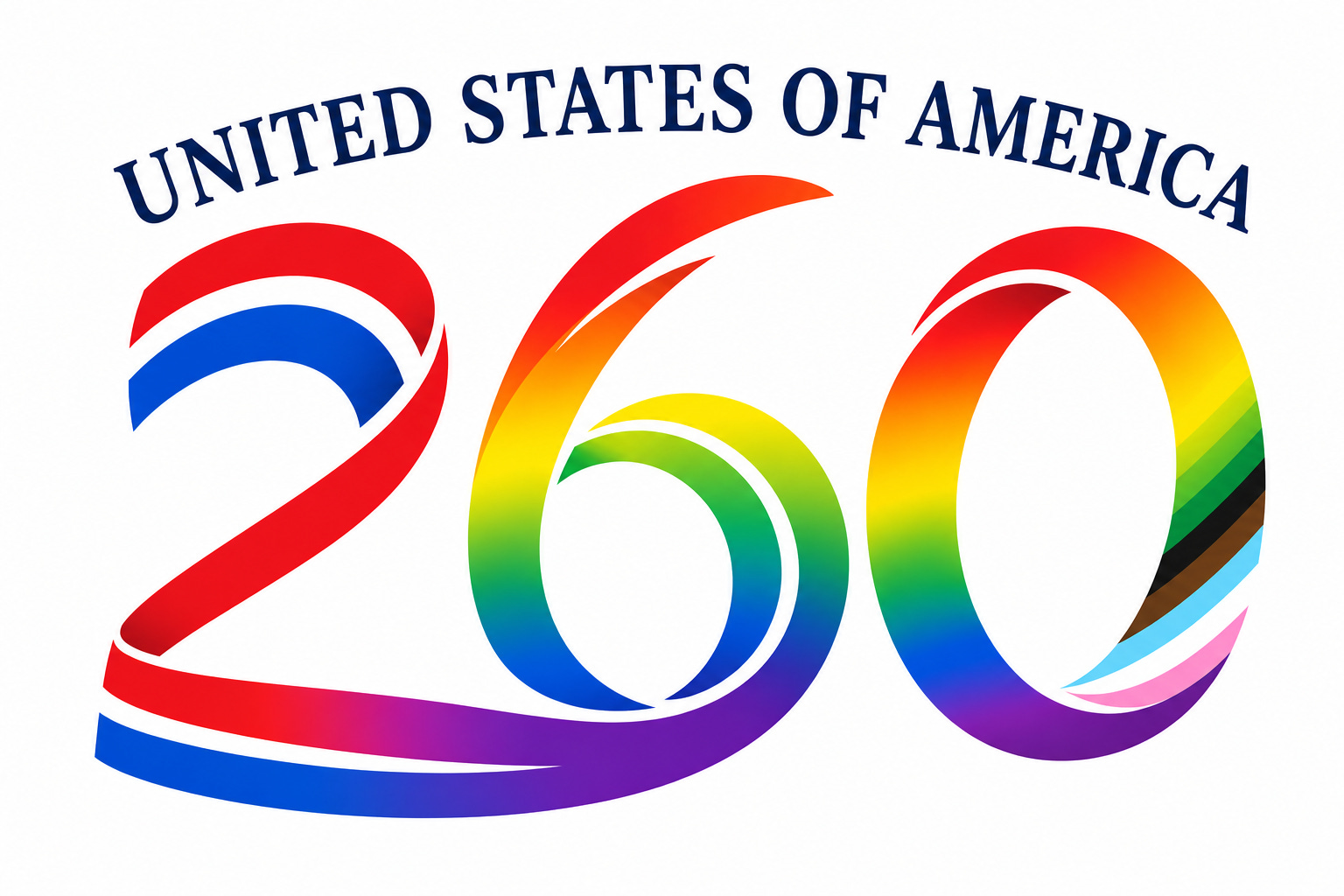
I have a Dream that the 260th anniversary ribbon is one that every human in this country can be proud of.
Getting there will take some serious work.
First, if you are questioning the legitimacy of the racialized assault on People of Color from this current administration - stop. No more gaslighting. It just sucks to be on the receiving end of that. What I am describing is as real as our history of race-based abuses and exploitation.
If you still feel like you want to question that legitimacy, pause and ask yourself why. Is it your comfort you are trying to shelter? Does accepting it feel like you should do something about it, and that is unnerving, because you have no idea where to start? All of these questions get at the natural physiological responses and mental calisthenics we do when something we strongly identify with feels threatened.
There is a version of US patriotism that can emerge, one that refuses to deny what has been integral to our 250-year national history and far longer. Embracing our full truth would be more universally liberating. A nation where we stop blaming the less fortunate and build systems to uplift all people, because we see their humanity in the complete historical account of why our country’s society is shaped as it is.
I encourage those of you questioning anything here to pick up any number of books to build your understanding of that more complete US history.
Enslaved people in their own words:
Narrative of the Life of Frederick Douglass, an American Slave (1845): the OG slave narrative, written by Douglass himself (he wrote three). (Free full text via UNC’s Documenting the American South; also on Project Gutenberg.)
Incidents in the Life of a Slave Girl by Harriet Jacobs (1861): a rare full-length narrative from an enslaved woman, focused on the sexual exploitation the male narratives largely omitted. (Free full text; also on Project Gutenberg.)
Twelve Years a Slave by Solomon Northup (1853): a free Black man kidnapped into slavery; detailed and unusually verifiable. You can also watch the movie. (Free full text; also on Project Gutenberg.)
The Library of Congress’s Voices from the Days of Slavery audio collection.
Born in Slavery: Slave Narratives from the Federal Writers’ Project: the full WPA collection, free through the Library of Congress. It contains more than 2,300 first-person accounts of slavery and 500 black-and-white photographs of former slaves. Better check these out before they get erased. Library of Congress Archive.
Native Americans in their own words:
Bury My Heart at Wounded Knee by Dee Brown: built from council records, first-hand accounts, and autobiographies of the Dakota, Ute, Sioux, and Cheyenne, telling the conquest of the West from the Native side. This should be a requirement in every US History class.
Life Among the Piutes by Sarah Winnemucca (1883): the first known autobiography by a Native American woman. (Free full text)
Our History Is the Future by Nick Estes: a Lower Brule Sioux historian weaves Standing Rock together with generations of Indigenous struggle.
Histories that look at 250 years through a different lens:
An Indigenous Peoples’ History of the United States by Roxanne Dunbar-Ortiz: U.S. history told from an Indigenous point of view, arguing it’s a story of settler colonialism.
Stealing America by Linford Fisher (2024): centers Native enslavement and land theft as central to the growth of the colonies and the United States.
A People’s History of the United States by Howard Zinn: the classic bottom-up survey; a good on-ramp, though critics note it flattens complexity.
The 1619 Project: A New Origin Story (Nikole Hannah-Jones, ed.): reframes American history around slavery and its legacy.
Four Hundred Souls (ed. Ibram X. Kendi & Keisha N. Blain): a community history of African America, 1619–2019, told through 90 Black writers.
How to Hide an Empire by Daniel Immerwahr: a history of the islands, atolls, and archipelagos that the US has governed and inhabited but keeps off the standard fifty-state map, capturing how millions of people were acquired and ruled without representation.
US History beyond what you learned in high school
Reconstruction: America’s Unfinished Revolution, 1863–1877 by Eric Foner: the definitive account of the brief postwar experiment in Black citizenship and how a coalition of white supremacist violence and political retreat dismantled it.
Slavery by Another Name by Douglas A. Blackmon: a Pulitzer-winning exposé of how, after emancipation, convict leasing put overwhelmingly African American men into forced labor for states, local governments, farmers, and corporations from the Civil War until World War II. Shows how Black Codes criminalized Black life to feed the system.
The Warmth of Other Suns by Isabel Wilkerson: the Great Migration told through three lives: six million Black citizens who fled the Jim Crow South for the North and West between World War I and 1970.
Killers of the Flower Moon by David Grann: the Osage murders in 1920s Oklahoma, where oil wealth and a federal “guardianship” system that treated wealthy Native people as wards enabled White guardians to plunder and kill with near-impunity.
Race for Profit by Keeanga-Yamahtta Taylor: the sequel to The Color of Law by Richard Rothstein: after redlining was banned, mortgage lenders and the real estate industry turned the promise of Black homeownership into a system of “predatory inclusion,” exploiting the same families exclusion had locked out.
The Chinese Must Go by Beth Lew-Williams: how American immigration policy incited anti-Chinese violence in the 1880s West and gave rise to the very concept of the “alien” in America, culminating in the first race-based immigration bans.
How to Make a Negro Christian by Kamau Makesi-Tehuti: reprints Rev. Charles Colcock Jones’s 19th-century enslaver’s manual The Religious Instruction of the Negroes in the United States alongside sharply critical commentary, laying bare how Jones openly sold religious instruction to slaveholders as a tool for producing greater subordination among the enslaved.
Want a slightly softer touch (not assuming you do or don’t)?. Check out the podcast Throughline’s episode: The story of July 4th is messier than you remember. It probably should be retitled “The story of July 4th is messier than we were taught.” Just be on the lookout for when narrators treat things as an intellectual exercise versus someone recounting their lived experiences (which you will hear a little of in this podcast). It isn’t necessarily a bad thing, but the privilege of not walking in someone’s shoes does allow us to make judgments about how they lived and their decisions. More critically, it also allows us to make excuses for harm done. I don’t think we can justify subjugation, rape, and other abuses with, “it was just how it was back then.” Privilege and lack of proximity to those abuses allow a narrator to get away with that. For me, that posture by any author is always worth scrutiny.
The above is by no means a complete list. And I realize I omitted many other narratives from other non-cisgender White male perspectives. My point was not to be exhaustive here, but to focus on the narratives from those groups most substantially impacted starting before 1776 in the US. But all of the stories matter. Read and learn about as many as you can.
Oh, and if you vote, great. But want to have an impact? Find one person who doesn’t vote and convince them to go to the polls as well.
Finally, let me end by recognizing how many others share this same Dream. And some are willing to put everything on the line to fight for it. On July 2, US Air Force Major Jason Paul Watson stood on the steps of the US Capitol and read a manifesto excoriating the current administration and calling for the impeachment of the President. Major Watson felt compelled to defend the US Constitution, which over time has become more aligned with MLK’s Dream. Now I don’t know Watson, but what is remarkable here is that Major Watson has so much to lose and still felt it was essential to speak out. He is an active and decorated military officer, a White man, a father of two, and three years from retirement and a military pension. He put all of that at risk, and much more, standing up to defend the values of what this country should aspire to and perhaps one day can be. He appears to be what he claims to be at this stage, though I am sure the propaganda portraying him as something other than what he claims will start to cascade across our news feeds. He even went as far as to create a Substack to put his version of his own thinking out before it could get altered.
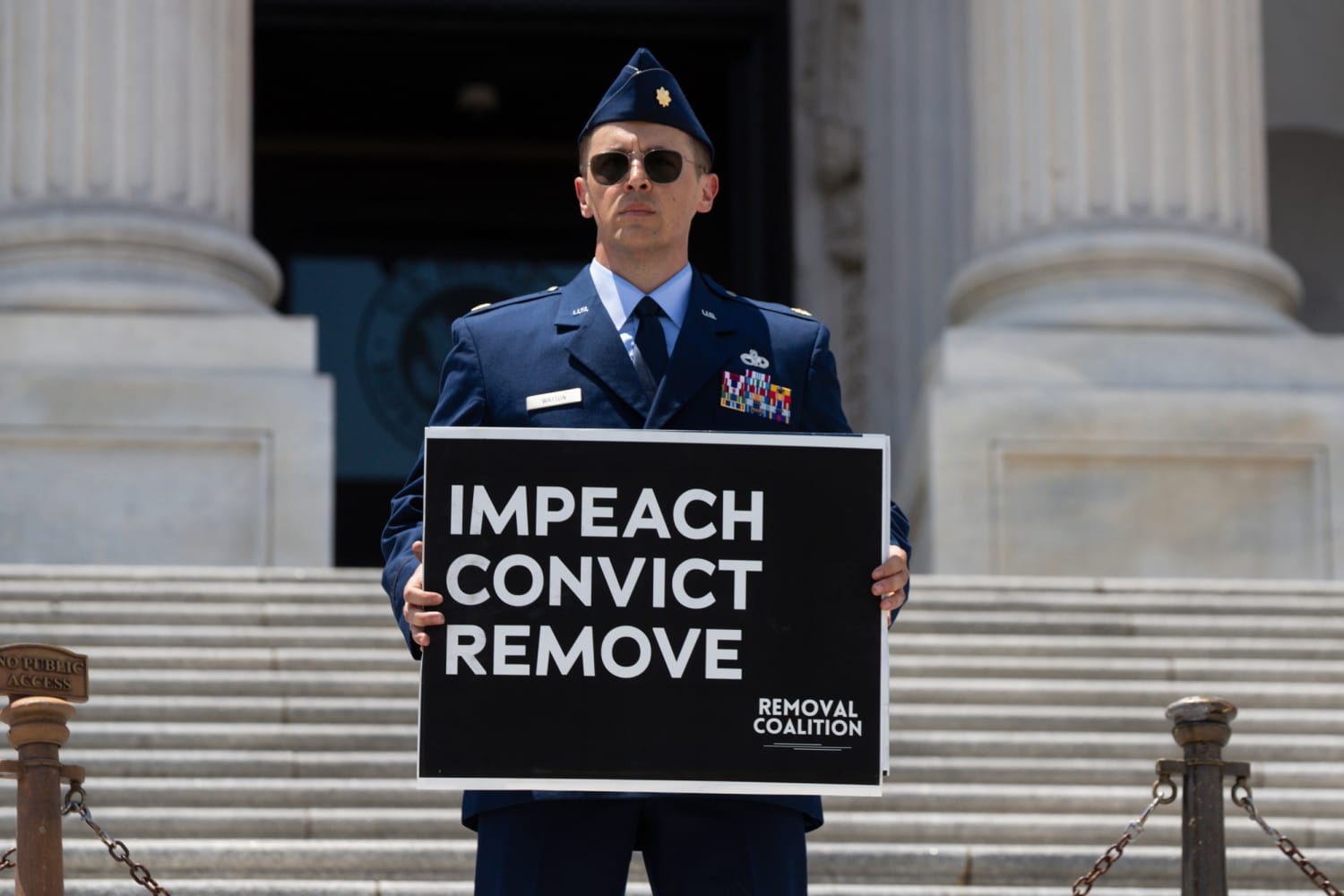
“You could look at everything that this administration’s doing, and there is some kind of tie-in to it being unconstitutional or illegal or corrupt or violent against American people or people living in our country,” Major Watson explained on YouTube. I watched some of this video to get a better sense of Major Watson as the person. If you watch anything, watch the 16:20 moment where he expresses his guilt for what his decision to step out and exercise his freedom of speech rights will cost the people he loves.
Regardless of who Major Watson is, his message is one of defiant truthtelling in the face of injustice, with nothing to gain from it but his conscience and, perhaps, to inspire others with more comfort and privilege to stand up for those with less.
So thank you for your patriotism, Major Watson. I have a Dream that we can all stand ten toes down and speak out for those who need us to when the time comes. Regardless of what it costs us.
Happy 250 years of perseverance and joy as an act of resistance.